
Post-Remediation / Clearance Testing
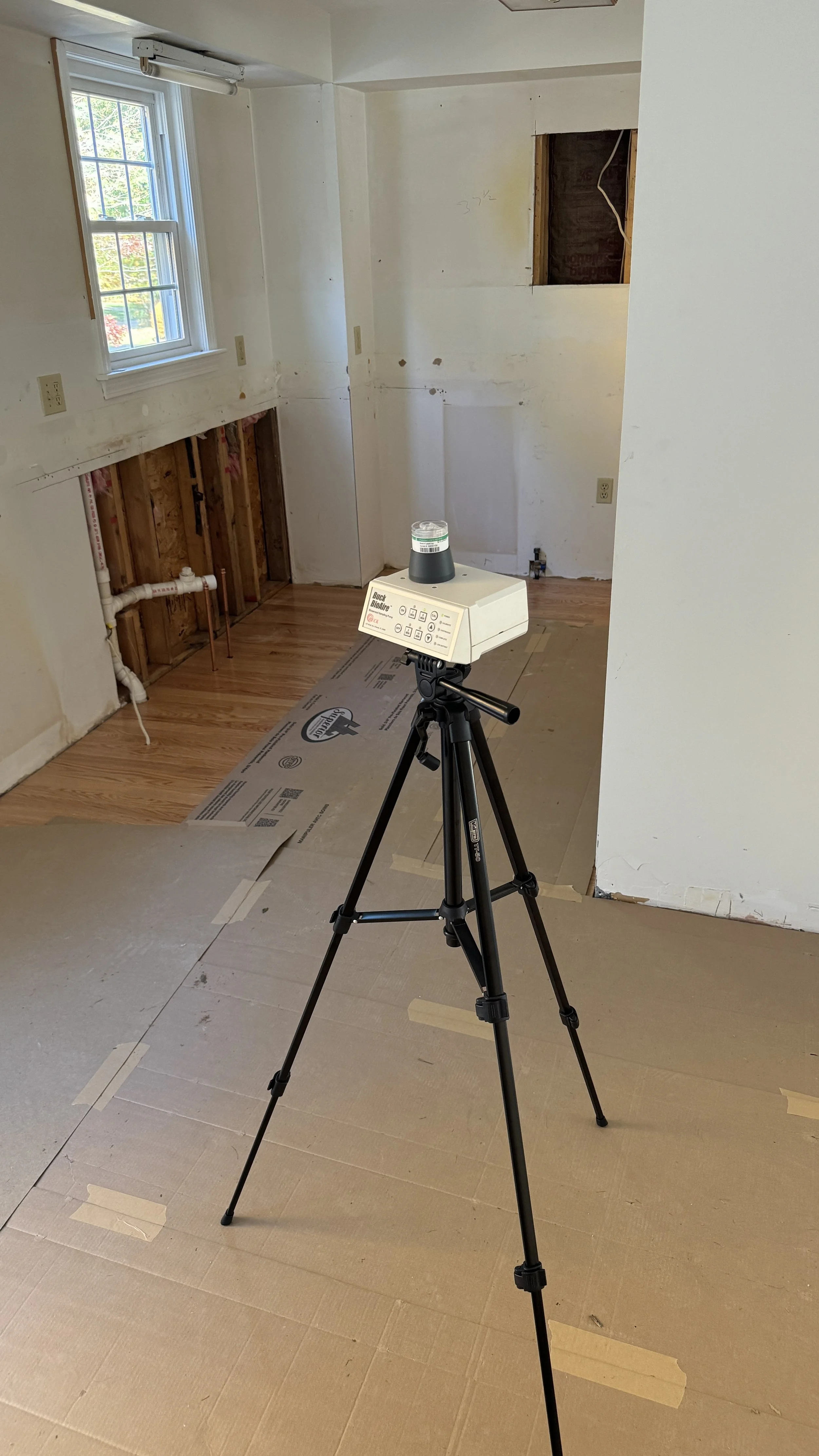
Post-Remediation or Clearance Testing is performed after mold remediation work has been completed to verify that affected areas have been properly cleaned and returned to normal fungal ecology.
This service provides third-party confirmation that remediation efforts were effective. It is designed to determine whether airborne mold spore levels and surface conditions are consistent with acceptable indoor environmental standards before reconstruction or re-occupancy.
Clear Insight
·
Measured Accuracy
·
Total Clarity
·
Clear Insight · Measured Accuracy · Total Clarity ·
Our Process
-
Remediation Review and Readiness Confirmation
Before testing begins, we confirm that remediation work has been completed and containment has been removed or is ready for clearance evaluation. We verify that all impacted materials have been addressed and that the moisture source has been corrected. Clearance testing is only performed once the remediation contractor confirms the project is complete.
-
Visual Inspection and Moisture Verification
We conduct a detailed visual assessment of the remediated area to confirm that surfaces are clean, free of visible dust and debris, and properly restored. Moisture readings are taken to ensure materials are dry and within acceptable ranges. If conditions are not suitable for testing, this is documented before proceeding.
-
Air and/or Surface Sampling
Air samples are collected within the remediation area and, when appropriate, compared to control samples from unaffected areas or the exterior. Surface samples may be collected if required by project scope. All samples are handled under proper chain-of-custody procedures and submitted to an accredited laboratory for analysis of spore types and concentrations.
-
Laboratory Results and Clearance Determination
You receive a detailed written report outlining laboratory findings, interpretation of results, and a clear pass or fail determination based on accepted industry standards. If clearance criteria are met, the space can proceed to reconstruction or normal occupancy. If elevated levels are identified, further corrective action is recommended before retesting.